How Data Access Works
How FDP Connects to Facility Data
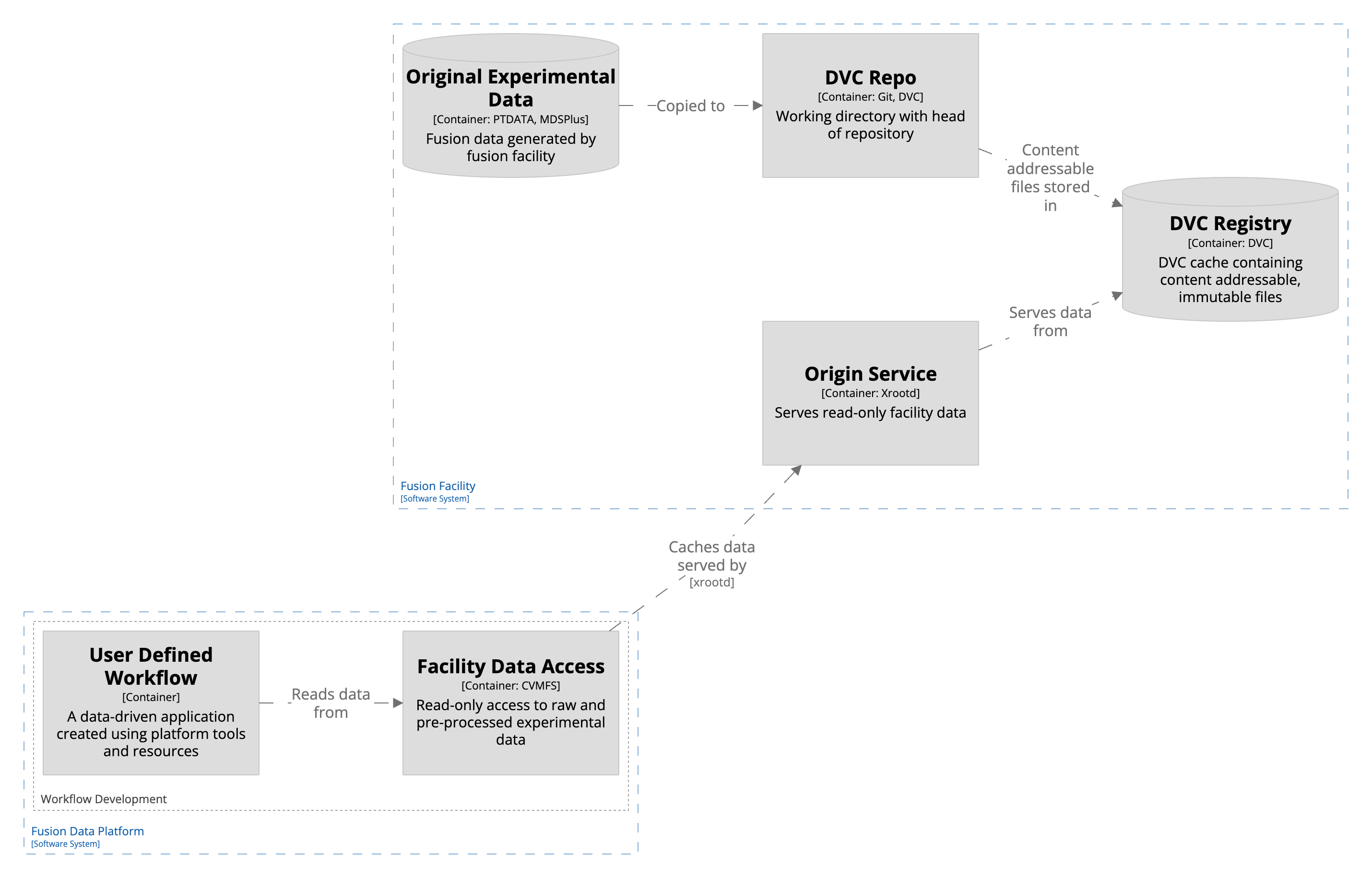
FDP reaches fusion data at several facilities through one interface, using a federated system built on the Pelican platform and a network of cache servers.
Where the Data Comes From
Each fusion facility runs an origin service, which acts as the official source for its experimental data. These services expose data directly from the facility's storage systems, including legacy formats like MDSplus and PTDATA, without copying the files anywhere.
FDP serves this data through the XRootD POSIX interface, so existing software reads it with standard file operations and still gets Pelican's caching.
How Caching Works
Pelican uses a tiered caching system. Data is copied from origin servers to caches that are closer to where users and compute resources are located. These caches use content-based identifiers so that the right data can be fetched reliably and efficiently.
At analysis sites such as supercomputers, a local cache fetches requested data from the facility origins. TokSearch reads through that cache, so you never download files or manage transfers yourself.
Keeping Access Secure
Access to FDP’s federated data is protected by token-based authentication using SciTokens. This makes sure only authorized users can access private datasets and that access is logged and traceable.
You do not manage those tokens yourself. fdp login runs the consent flow once and caches a short-lived token per device, and fdp run renews it when needed. See Basic Usage. Public archives such as MAST/MAST-U are served without a token.